
Where Gallatin Crime News Appears
Start with the arresting agency, not the newsroom, when you want the official record. The Gallatin Sheriff page lists contact information but offers no public booking feed, no press mugshot gallery, and no recurring arrest bulletin. City police pages can at least identify a department, even without a blotter. One wrinkle matters here: the Illinois Sheriffs' Association lists no county jail for Gallatin. So a Gallatin arrest story may point you toward the Saline County receiving office, a city report, or a court file instead of any county roster.
Regional outlets still earn their keep. WFIW runs an active local-news page, WRUL keeps a Gallatin tag plus a local-news archive, and the Daily Register connects to the weekly Gallatin Democrat and Ridgway News listed in the Illinois Press Association directory. KFVS12 shows how regional television handles event-driven coverage. Treat all of these as leads and context. They are not complete inventories of every arrest.
Search smart. Use the article's date, agency, and place, then ask the official custodian for an incident or case number. A story that says someone was "booked" may describe a short stay in another county, and an "arrested" headline may cover a citation or an event that never becomes a public court case.
Gallatin Crime News Outlet Map
The table keeps each outlet's role narrow. “Photo” means an individual story may display an image, not that the outlet maintains a public booking-photo archive.
| Outlet or source | Coverage | Photos? | Where to look |
|---|---|---|---|
| WFIW | Active regional public-safety and Gallatin reporting | Individual story images may appear | Local News landing page |
| WRUL / WROY-WRUL | Gallatin court, police, and interagency stories | Story images may appear | Gallatin tag and local-news archive |
| Daily Register | Regional site connected with Gallatin Democrat and Ridgway News | No recurring Gallatin booking policy verified | News pages and searchable archive |
| Illinois Press Association directory | Publisher and weekly-newspaper identity | Directory only | Newspapers-by-county listing |
| KFVS12 | Event-driven regional television coverage | Historical story image supplied by another sheriff's office | Individual report, not a feed |
| Gallatin Sheriff and city police | Official arrest and public-safety source | No verified recurring public booking feed | Agency contact and records request |
| Mugshots.com | Unofficial county-level historical page | Historical image archive context | Visible year links ended at 2021 in the research check |
WFIW and WRUL are especially useful for locating an event date or agency. The newspaper connection is useful for older coverage and local names. None should be described as the official source of a current mugshot or final court result.
WFIW and WRUL Gallatin Leads
WFIW Local News is an active regional landing page with Gallatin public-safety reporting mixed with broader area stories. It can supply a headline, publication time, agency name, or charge wording. That information helps narrow a records request. It does not tell a reader whether an individual was later released, transferred, or cleared, and the page does not function as a Gallatin-only booking list.
WRUL's Gallatin archive and its local-news section provide another regional trail. Tag pages can contain older material, court developments, and stories about events outside the county that mention Gallatin. Read the place and agency carefully. A story's headline can remain in an archive after the case has changed.
The source captures below show how these outlets organize news, not a roster of people. Images are included for source context only, with no faces or booking grid reproduced as a public record.
Open WFIW's local-news page when tracing a current story.
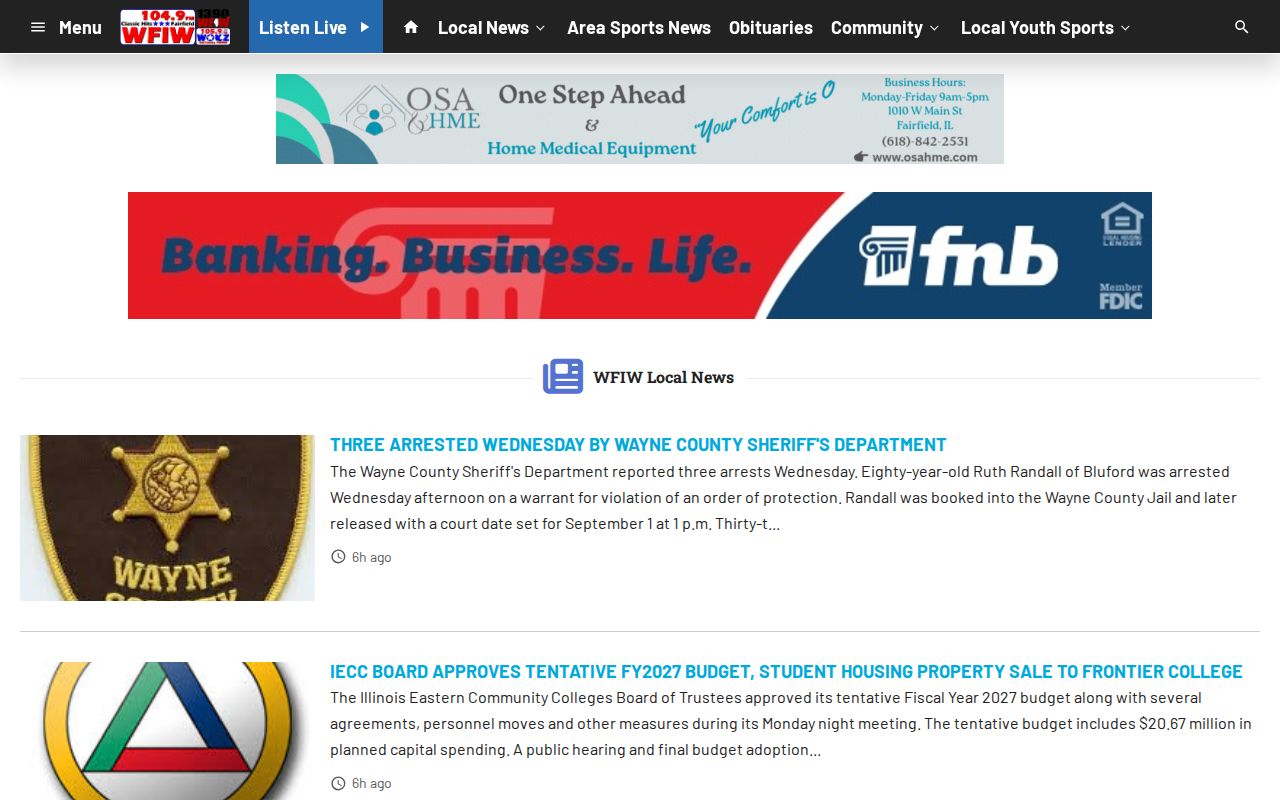
WFIW's page is an editorial feed. Verify any person-specific allegation against an agency record and the Gallatin Circuit Clerk.
Review WRUL's Gallatin story archive for an agency or case clue.
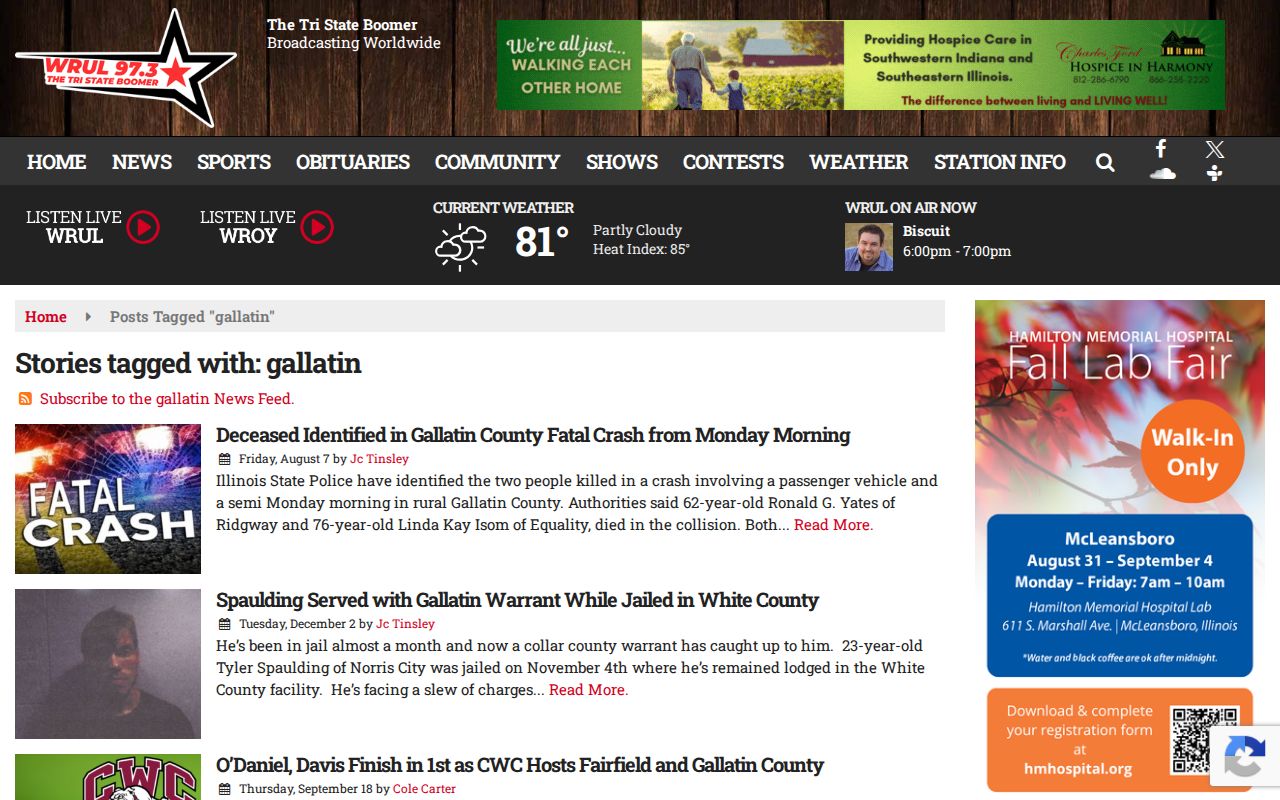
WRUL can help connect a story to a date, town, or court event, but the official source controls the record.
Daily Register and Local Weeklies
The Illinois Press Association newspapers-by-county directory identifies the Gallatin Democrat in Shawneetown and Ridgway News in Ridgway as weekly publications and points to the Daily Register web address. The connection is a useful local-news route, especially for older coverage and court context. It is not evidence that the Daily Register maintains a current Gallatin booking-photo section.
News archives can preserve a printed charge, a hearing date, or a report that never appeared in a jail system. A story may also use a photograph supplied by an agency that is not the arresting office. The source should be labeled as a news image, not automatically as a booking photo. If an article is paywalled or archived, record the publication date, issue, page, and source URL before moving to the official agency or court.
The screenshot below is a publisher landing page, not a mugshot collection. It helps show where Gallatin-related news may be indexed.
Open the Daily Register news landing page for local and regional coverage.
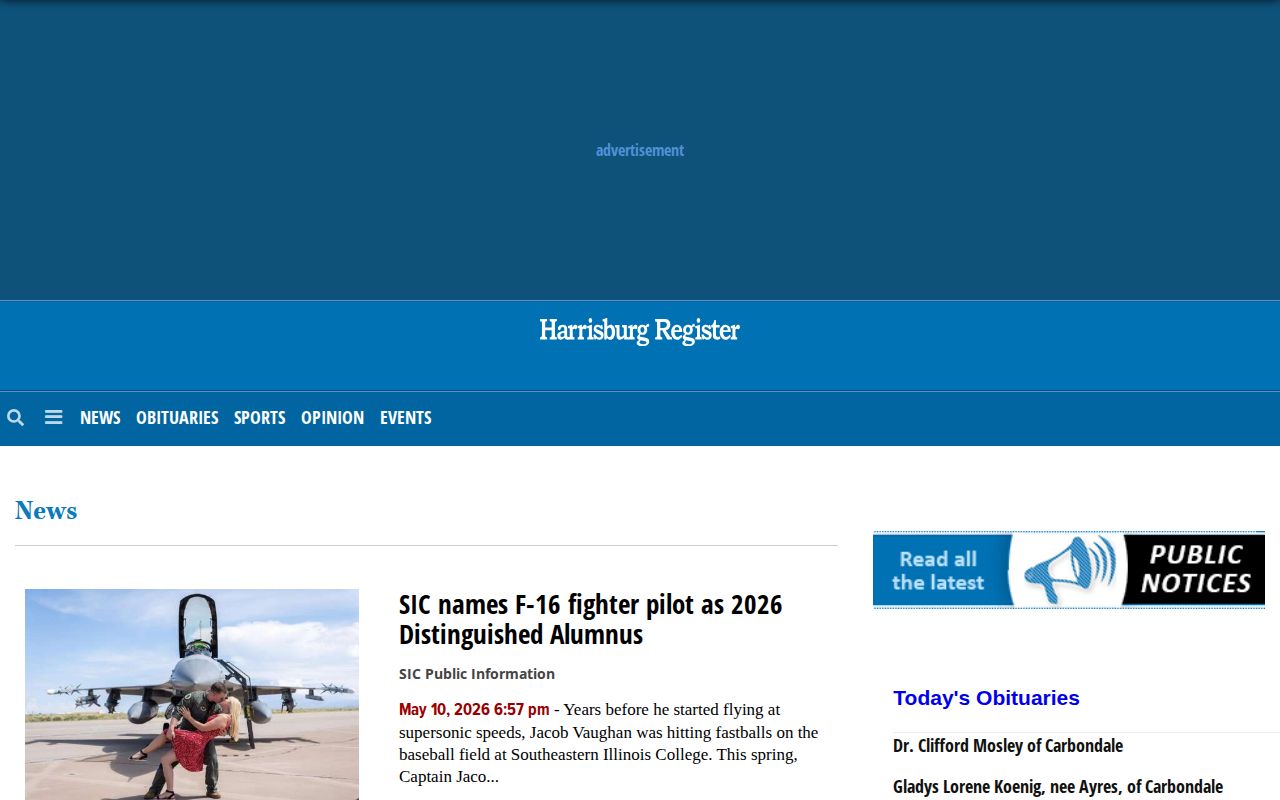
Use a news article to locate the official event. Do not turn a weekly report into a list of every recent arrest.
How Gallatin Photos Reach News
How does a booking photo end up in a news story? Several paths exist. A sheriff's office may release it. A reporter may obtain it through a records request. Or the image may come from a court file or a different agency entirely. One KFVS12 story credited a neighboring sheriff's office for its picture. That's a good reminder. Check the credit line before assuming a photo came from Gallatin booking.
Illinois law shapes what agencies must hand over. Arrest information has to be released within statutory timing rules, and photographs are identified when available, subject to exceptions. The State Records Act also restricts posting booking photos on social media for some lower-level offenses. None of this creates a public search feed. A jail can release an arrest report while holding back an image under an exemption, or simply because none exists.
If a story carries a photo, note the caption, the credit, the date, and the agency named. Then ask the arresting office and the receiving facility whether a booking photograph exists and can be released. Faces should never be scraped into a gallery. An image alone is a poor way to identify anyone.
Note: A photo credit is a source clue, not proof the picture was taken during Gallatin booking.
From Gallatin News to the Record
A news story is a starting point, nothing more. The official record gives the firmer answer. With a name, date, place, or agency from a report, a reader can work from the clue to the custody record step by step.
- Save the story details. Record publication date, event date, agency, town, charge wording, photo credit, and the article URL.
- Call the arresting office. Ask for the incident number, whether the person was released or transported, and which office controls the arrest report.
- Confirm outside custody. Gallatin has no county jail. Ask whether Saline County is the current receiving facility, and confirm the present contract before sending a request.
- Request the record and photo separately. Use a narrow written request with the date, agency, and incident number. Ask for the non-exempt portion and a fee estimate.
- Check the court result. Use the official Circuit Clerk application for the filed case, hearing, bond or detention order, dismissal, acquittal, supervision, plea, or sentence.
Where do you turn after the story? The county-wide Gallatin arrest and booking path walks through the no-roster situation and the records-request steps. On the court side, the Gallatin Circuit Clerk application is the route once a case is filed. The IDOC offender search only matters if a sentence later places someone in state custody. Keep expectations realistic. A custodian's response carries more weight than any headline. A court file may not contain the jail's original photo.
Unofficial Gallatin Mugshot Sources
Third-party mugshot sites hold little for Gallatin County. One verified page exists on Mugshots.com, a major county entry with year links running through 2021, but it is unofficial and stale for anything recent. Other big names came up empty. Busted Newspaper's Illinois index skipped Gallatin. The RecentlyBooked Illinois path returned gone. Arrests.org left the county off its list. Mugshots.zone had no confirmed local section. Those gaps matter. A matching name from another state should never be imported into Illinois coverage.
Private pages that call themselves a Gallatin County Jail roster clash with the Illinois Sheriffs' Association, which lists no jail for the county. Some invent capacity numbers, visitation rules, or search tools with nothing behind them. A county name inside a private URL is not evidence of a government record.
Spot an old or wrong item on a private site? Save the URL first. Then compare it against the arresting agency, the receiving facility, and the court record. Use a documented correction process if one exists. Never pay a removal service. Never mail sensitive documents to a site with no clear identity or purpose.
Gallatin News, Court, and Disposition
The words in a headline freeze one moment. "Arrested" and "charged" describe where a case stood that day. Courts keep moving after that. Charges get amended, dismissed, resolved through supervision or a plea, or end in acquittal or sentence. A docket might even show a warrant recall or a failure-to-appear without the underlying police report attached. Track the case number and the date rather than trusting a headline.
Headlines age fast, dockets change, and the docket is the part that counts. When no disposition appears anywhere, the honest answer is simply that the outcome was not verified.
Juvenile records sit in their own category under Illinois law. They should never be searched or described like adult booking records. Sealed or expunged material may take a court order and a formal agency correction path to access, and a news archive can linger online long after the official record has changed. Any correction should carry its date and the official source behind it.
The soundest account connects three things: the news clue, the agency record, and the court outcome. That approach serves the record, the person named in it, and any reader who needs a current answer.